

Before I tell you what I think of the Callaway 300 Pro laser rangefinder, you should know how I ended up with one. I am Marcus, a self-employed guy in his late forties who has played golf since high school, and for most of that time I was an eyeball-and-pace player. I stood in the fairway, squinted at the flag, and called it about 150. The problem was that about 150 was never 150. It was 138 or 162, and those six random yards were doing more damage to my card than my swing ever did.
So I bought the 300 Pro and played a full season with it, then I sat down one winter night and went through my notes, ready to write the honest version. Not the sponsored version, not the changed-my-life version. The version where the slope switch gets grazed without me noticing, the battery door gets fiddled with, and the fire button annoys me more than it should. If you have been reading rangefinder reviews and wondering why they all sound the same, this is the rest of the story.
Full disclosure up front, since an honest review starts there. The 300 Pro is not a premium device with a premium price. It sits in the middle of the rangefinder market, where most weekend golfers actually shop, and its 4.7 star average across more than twelve thousand Amazon reviews tells you it delivers what it promises for the people who buy there. That is the context for everything that follows.
The Quick Verdict
A thoroughly capable rangefinder that reads to the flag fast, handles slope legally, and costs a sensible amount, held back by a fire button that sits a little far back and a slope switch that feels cheaper than the rest of the unit. For the weekend golfer it is the one I would buy again.
Amazon Check Today's Price →The Rangefinder That Finally Made Me Trust Numbers
I have carried the Callaway 300 Pro every round for a season, and it is the distance tool I would buy again tomorrow. It holds a 4.7 star rating across more than twelve thousand Amazon buyers for a reason. Check today's price and the current reviews before you decide.
Amazon Check Today's Price on Amazon →How I've Used It
The honest test started in late winter. I carried the 300 Pro every round of the season across three different courses: my muni home track, a hilly public course forty minutes away, and a weekend scramble with guys who are better than me. I also kept it out during practice rounds, because that is where a rangefinder usually lives or dies for me.
I did not just laser the flag. I lasered the front and back edges of greens, bunker lips, tree lines, and the group ahead on blind holes, and I wrote down every yardage that felt wrong versus what turned out to be true when I reached the ball. That habit, more than the features, is what this article is actually about.
And one fact that matters for honesty: I bought this rangefinder myself. Nobody sent it, nobody sponsored a round, and none of my golf buddies know I am writing this. If a brand had handed me a free unit, I would tell you, because a reviewer who hides that is wasting your time.
What Nobody Tells You About That Slope Switch
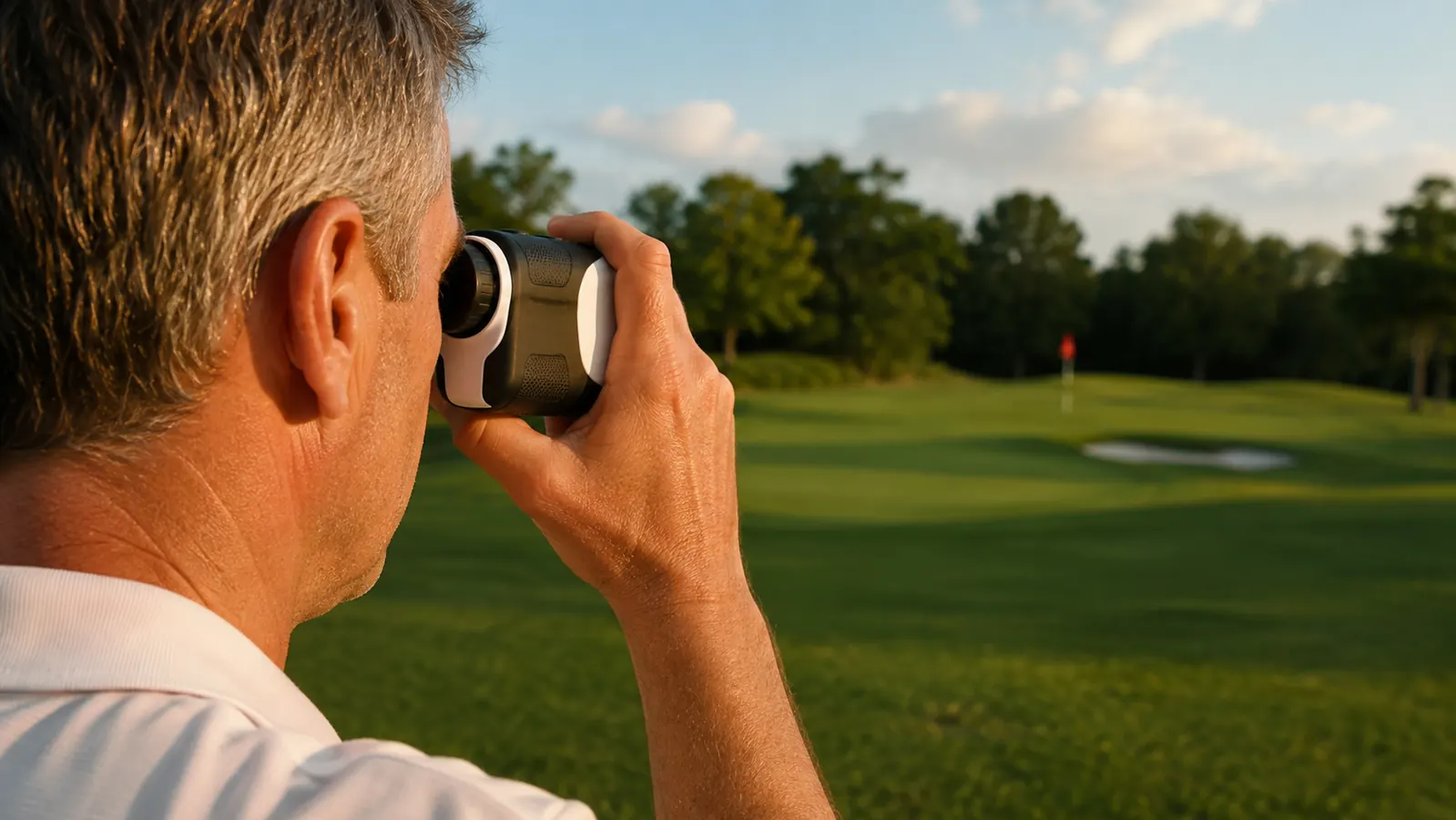
The Callaway 300 Pro runs its slope mode off an external switch, and that switch is the detail every other review skips. It is a small sliding toggle on the side of the unit. Flick it one way and you get the yardage adjusted for the up or down of the shot. Flick it back and you get the raw number. The purpose is practical: plenty of leagues and medal days ban slope, so an external switch is the difference between a legal rangefinder and one you cannot use on the day that counts.
Here is what nobody tells you. The switch is the part of this unit that feels least like the rest of its build quality. It is small, it moves with a soft click, and in damp morning conditions it is harder to find by feel than you want. Twice this season I played a stretch with slope on when I meant it off, because I grazed the toggle without noticing. The numbers were never wildly wrong, a yard here, two yards there, but if exactness is the whole point, that is exactly the kind of thing you ought to know before you buy.
The fix is simple, and it is the best tip I can hand you for any slope-capable rangefinder. Decide what number you want before you push the button. Set the switch, then shoot, and stop second-guessing. That order kills the what-did-that-read confusion, and it turned the switch from a nuisance into a non-issue by midsummer.
The Button, the Grip, and Other Small Wrinkles
A rangefinder is one of those products where ninety percent of the experience lives in small details. The fire button is a thumb button on top, and it is two-stage: a light press starts the scan, a full press locks the read. The lock is genuinely good. When the unit grabs the flag it vibrates, and that vibration is honestly one of my favorite parts of the whole thing. You feel the numbers lock before you ever look down at the display.
But the button sits a little far back for my hand, and I have average-sized hands. To press it cleanly I shift my grip up about a finger's width, which fights the grab-and-go speed you want when the group behind you is waiting on the tee. It is not a dealbreaker, and I honestly stopped noticing by June. But if you have large hands, try to hold one before buying, because that reach is exactly the thing a spec sheet never shows you.
Battery life has been genuinely good. The unit takes a standard CR2, and I ran the whole season on the one that came in the box. The auto-off sleep feature is the difference between a battery that lasts one season and one that lasts two, and I still keep a spare CR2 in the bag pocket. Losing your rangefinder to a dead battery on the first tee is the most avoidable bad day in golf.
Does a Rangefinder Actually Lower Your Score
Here is the honest answer, and it is not the answer you usually read. A rangefinder will not fix a push slice or a three-putt, and I know because I carried one all season and still gave away plenty of strokes on my own mistakes. What it did do was remove a whole category of guessing from my approach play, and that showed up as the dull, repeatable kind of improvement you can actually bank.
My home course has three greens where the pin sits behind bunkers, and for years I aimed at the center of the green because I refused to trust my eye over a trap. With the 300 Pro I started going at the tucked pin when the play called for it. That is worth more than any spec. A rangefinder moves your target from somewhere on the green to this exact number, and for a mid-handicap golfer that is precisely where strokes hide.
It also improves club choice, which sounds obvious until you do the math. When I say my seven iron goes 150, it actually goes 146 out of the fairway and 141 out of the rough. Knowing the exact number every time lets me pick the club that matches the shot instead of the one I wish I hit. That alone is worth today's price to me, and it is the claim I will stand behind most firmly in this article.
The one place I had to manage expectations was inside a hundred yards. Up close, a rangefinder trades some of its magic; you can pace off a wedge shot in eight seconds and get close enough. The 300 Pro still helps there, especially on front-of-green versus flag decisions, but the big wins are full approaches. If you are buying one hoping it turns short pitches into sure things, know that the yardage is not the part of that shot you are actually fighting.
The View, the Lock, and Going at the Flag
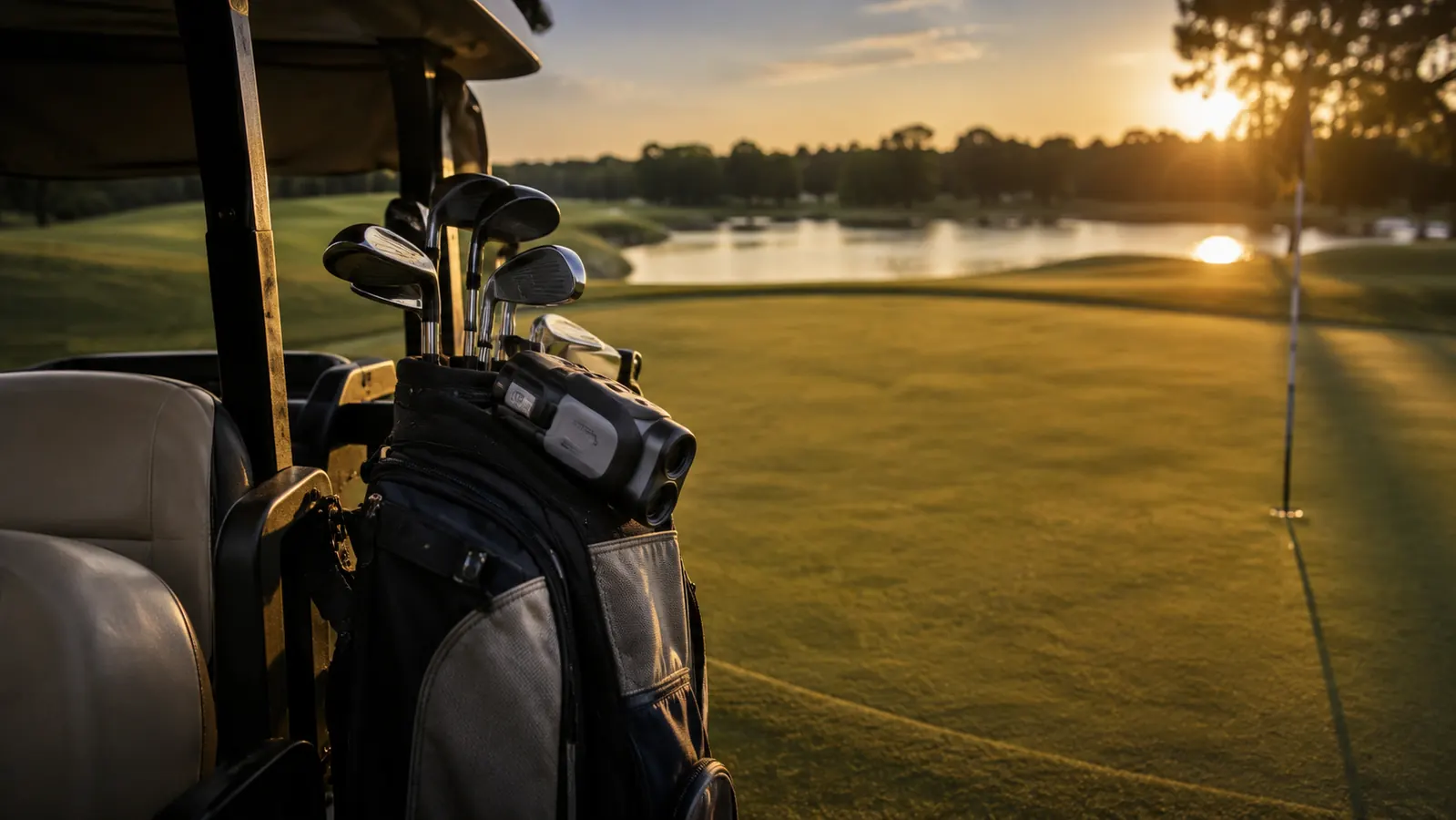
The optics are clear, and the measurement range covers everything I need on a normal course. I have lasered a back bunker at well over two hundred yards, and the unit reads fast, a second at most in good light. The flag lock grabbed the pin and vibrated even on a stick I could barely see with my bare eye on a hazy late tee shot, and that surprised me the first time it happened.
The catch, and this is the real catch people rarely say out loud, is that a rangefinder is only as good as the target you give it. On a tree line or a folded towel behind the green it can lock the wrong thing and hand you a number that is completely real and completely useless. I learned to drop to the stick quickly and to trust only a read backed by the vibration. If it does not vibrate, I do not trust it.
The other honest trade is the feature list. You are not getting a red display or an adjustable eyepiece for glasses here. What you get is a solid, readable unit that does the two jobs that matter, distance and slope, without charging you for extras you will use twice a season. For the way most of us actually play, that is the correct trade, and it is part of why this unit holds a 4.7 star rating across more than twelve thousand Amazon reviews.
Carrying is easy and the case does its job. The unit tucks into a small pouch that clips to a bag loop or slides into a pocket, and it is light enough that I forget it is there until I need it. It survived a season of bag slams, cart drops, and one bounce on a cart path, and it still reads exactly the same as the day I unpacked it. That kind of ordinary durability is the quiet reason I trust it heading into another season.
The Value Question, Handled Honestly
Rangefinders have a weird price span. You can spend a lot more on a unit with a fancier name, and I could have. I have used friends' premium units on scramble days, and they are lovely. Callaway is not trying to beat them at their own game here. It is trying to give you ninety percent of the experience for a price that makes sense for a guy who also has to buy balls, gloves, and the occasional new wedge.
Here is what the honest comparison boils down to. The premium units do everything the 300 Pro does, plus a better display, a slightly nicer button, and a bolder name on the side. Whether any of that is worth the jump is a question only your wallet can answer. I wrote a separate head-to-head piece comparing the 300 Pro against the big-name alternative directly, because that argument deserves its own honest look, but the short version is that for a mid-handicap weekend walker the gap shows up a lot less than the marketing suggests.
One more honest note on value, because it surprises people. A rangefinder does not wear out the way clubs and balls do. There are no grips to replace every year, no covers to lose, no soft wedges to wear down. Buy a decent one once, look after the lens, and it is a five-year purchase that many golfers make every two years because they bought cheap twice. The 300 Pro is not cheap-cheap, and that is a feature. It is the one I plan to still have in the bag five seasons from now.
What I Liked
- Reads the flag fast and locks the number with a satisfying vibration
- External slope switch keeps the unit legal for club and scramble play
- Runs the whole season on a single CR2 battery thanks to auto-off
- Built to survive bag slams, cart drops, and one bounce on the cart path
- 4.7 stars across more than twelve thousand Amazon reviews for a reason
Where It Falls Short
- Fire button sits a little far back for some hand sizes
- Slope toggle feels cheaper than the rest of the unit
- No adjustable eyepiece for golfers who wear glasses
- You have to learn to aim at the flag itself, or the read will lie to you
My seven iron says 150 and it is 146 out of the fairway and 141 out of the rough. Knowing the exact number every time is worth more to me than any club I have bought in five years.
Who This Is For
A rangefinder in general, and this Callaway in particular, is for the golfer who plays enough that guessing actually costs them. If you are out twice a week, if you record a score that means something to you, if you have ever stood over a wedge with no idea whether the play was 56 or 60, the 300 Pro is for you. It rewards the player who will look at the number, trust it, and choose the club that matches it.
It is also for the golfer who plays tournament days, because that external slope switch is the whole reason a busy lunchtime scramble or a club medal will let you keep it in the bag. Hand me one rangefinder I can switch from legal to illegal with a thumb, and my Saturday morning group will not have to hear me complain about a slope ban ever again.
Who Should Skip It
Every honest review owes you the reasons not to buy, so here they are. If you play once a month with borrowed clubs, you do not need a rangefinder yet. If you are the rare player who can feel a single yard and wants every bell available, the 300 Pro is not that device. And if you know yourself well enough to admit you will not put up with a small switch and a button that takes ten rounds to feel natural, buy a physically larger unit and be done. This is a great rangefinder with honest limits, and those limits are the point of this article.
And one shopping note for anyone buying on Amazon for the first time. Check the current listing for the version with the external slope switch, because that is the model I am writing about, and read the recent reviews rather than the overall average. Rangefinder reviews swing hard on a single bad experience, so give the neutral ones the most weight. That habit has saved me more bad purchases than any feature list.
The Honest Bottom Line
After a full season I would hand the Callaway 300 Pro to any friend who asked which rangefinder to buy. Check today's price on Amazon, read the current ratings, and decide for yourself.
Amazon Check Today's Price on Amazon →