
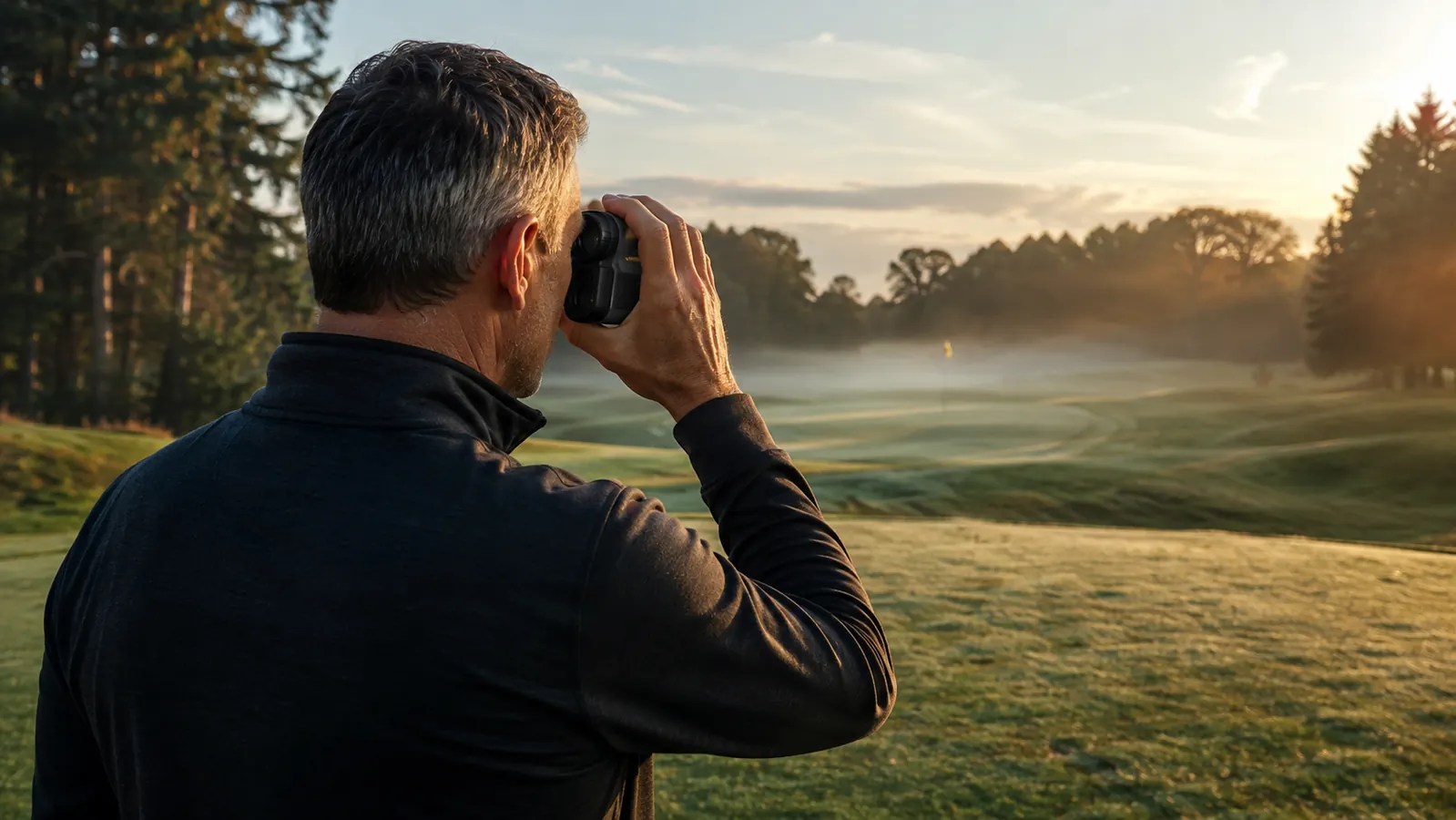
Here is the short answer I wish someone had given me before I second-guessed myself in the pro shop: for a recreational golfer who plays for fun, a few weekend money games, and an occasional club championship, the Callaway 300 Pro is the better buy, and the Bushnell Tour V5 Shift is a better instrument that most of us simply do not need. I say that after carrying both for the back half of last season and the early part of this one. On the course they are closer than the price gap would have you believe. Off the course, in build quality and glass, the Bushnell is genuinely ahead. The question is whether that ever shows up on your scorecard, and for most of us it does not.
Here is how I compared them, because I did not trust the spec sheets and neither should you. The same eighteen holes, the same tees, the same Saturday afternoons across about ten rounds in May and June. I shot flags from the fairway, lasered the front edge on uphill approaches where the pin sits on a shelf, ran slope on the two holes that climb toward the clubhouse, and used both from the cart on the days I rode with my buddy Mike. I wear glasses on some of those rounds, which matters more than you would think. I also handed both to Mike, a scratch golfer, and asked him to call the yardage he trusted before I told him which unit was which.
What I found is that the argument between these two is almost never about raw accuracy, because both will hand you the distance to the pin within a yard all day long. The argument is really about price, slope controls, build, and optics. That is what the table below settles, and I wrote it so it does not flatter either brand.
| Callaway 300 Pro | Bushnell Tour V5 Shift | |
|---|---|---|
| Price today | Sits a clear step below Bushnell's flagship list price; you get a tournament-spec reading tool without the flagship fee. | Premium list price that holds near there; you are paying for the brand, the optics, and the pedigree. |
| Accuracy | Locks the pin within a yard and holds the read even with a little shake; matched the Bushnell pin for pin in my testing. | Same one-yard spec; the read on rolling ground was the same as the Callaway's on every hole I shot. |
| Slope switch | External switch you can flip without taking your eye off the pin; tournament-legal reading with one touch. | Tucked toggle with an on-screen indicator; equally tournament-legal but you have to look for it. |
| Build and weather sealing | Solid plastic housing that survived two cart-path drops; a consumer instrument that travels well. | Magnesium body, fully waterproof, built to live on a cart for a decade; heavier on purpose. |
| Optics in tough light | 6x view is bright enough to read a flag at 220 yards; hunts a little when the pin hides in a leafy background. | Cleaner glass and better contrast; it calls the pin out of trees where the Callaway gives you the tree. |
| Battery and upkeep | Standard CR2, roughly a season per cell, nothing exotic to buy. | Same CR2 and a similar appetite; you will be swapping at the same moment either way. |
| Who it is built for | The weekday golfer who wants exact yardages and a sensible spend. | The golfer who wants the recognizable build and will keep it for ten years. |
Read that table the way it is written. The Callaway 300 Pro does not win every row, and any article that tells you it does is selling you something. The Bushnell takes build and optics, genuinely, and if you keep one bag for a decade those two rows earn their keep. The Callaway wins where it matters to the arithmetic: the price, and a slope switch that actually gets used in a competition. Everything else is a wash you will not feel on a scorecard.
What the Specs Actually Mean on the Course
A laser rangefinder is a simple machine. It bounces light off a target and tells you how far away that target is. The real differences between units show up in three places: how fast they lock, how well they read when you cannot hold the dot perfectly still, and how easily you lift the reading off the flag instead of the stuff behind it. Both of these units do all three well enough that the gap on a scorecard is you, not the glass.
Under 220 yards, which is every approach shot most of us face, the two units hand back the same number hour after hour. I shot the same flag four times in a row with each unit and the read never moved more than a yard on either one, and I had to work hard to get a bad number out of either. Where they part ways is past 250, into a treeline, or into a hazy sky, and that is exactly the territory a mid-handicapper visits maybe twice a round. Spend your money on the range of play you actually live in.
Flag lock is where nervous hands show up. The Callaway 300 Pro locks in under a second any time you can hold the reticle anywhere near the pin, and it confirms the read with a steady display instead of leaving you wondering. The Bushnell adds a small pulse when it locks, which helps on a windy tee. Both got the job done for me, but if you are new to rangefinders the faster lock of the 300 Pro forgives a little shakiness while you learn to brace against a club or the cart roof.
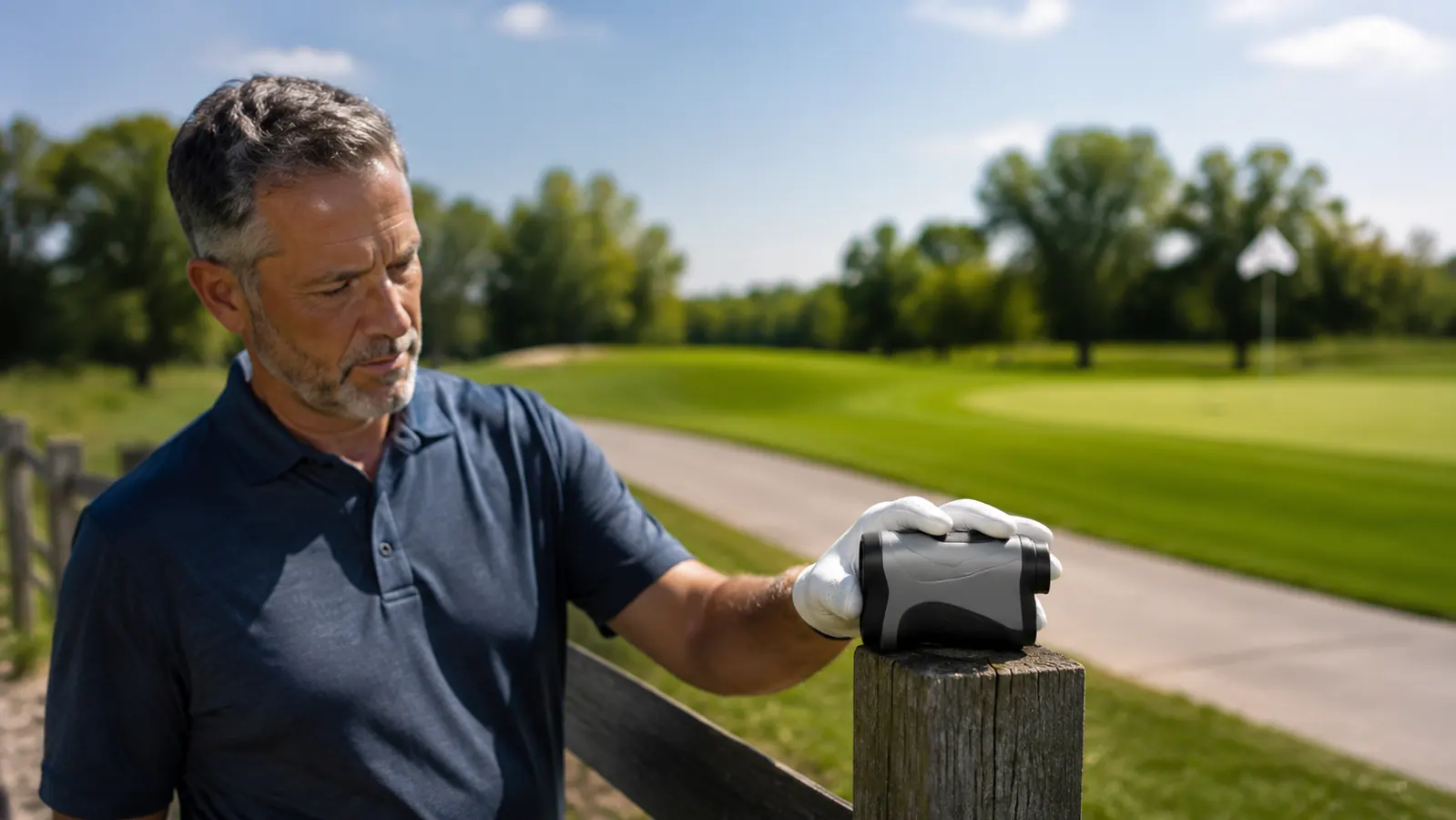
Where the Callaway 300 Pro Wins
The first win is the price, and I am not going to dress it up. The Callaway 300 Pro sits meaningfully below the Bushnell V5 Shift at today's price, and on a golf budget that difference is a season's worth of balls or a couple of range cards. You give up nothing on the number, because the yardage it reads is the same yardage the Bushnell reads. What you are not buying is the brand tax, and for a recreational golfer that is the straightest deal in the bag.
The second win is the slope switch, and it is the detail that sold me. The Callaway 300 Pro puts the switch on the outside of the body, so on the days I play in a competition I reach down, flip it with my thumb, and the slope read is gone before I ever tee off. The Bushnell's toggle is tucked in with a screen indicator, which is fine until you are mid-routine on a match hole and your hands remember it a fraction of a second later. It is a small thing that shows up exactly when small things cost you.
The third thing in the Callaway's favor is lighter carry weight. At just over six ounces it sits on a lanyard or clips to the bag without making itself known over four hours on a hilly course, and on a July round that is more value than any optics chart. The button layout is also simpler: power on one side, the shot button on top, and you are done. I have watched someone hand a Bushnell back after one hole and ask where the mode button lives, which is real friction on a course.
Where the Bushnell Tour V5 Shift Wins
I am not going to pretend the Callaway wins everything, because it does not. The Bushnell feels like a better instrument in the hand, full stop. The magnesium body is a genuine step up in weight and balance, and it does not complain about a passing shower the way an unprotected plastic unit makes you want to hurry it into the bag. On a hazy afternoon I asked both units to find a pin tucked in the cedars at the far end of the range, and the Bushnell called it while the Callaway hunted for a second or two. That is a real difference.
The optics are the other place the Bushnell earns its reputation. The glass throws more contrast and holds the image cleaner across the whole field, which matters when you are reading a flag against a bright sky or a busy background of bleachers and clubhouse. If you have worn down the bridge of your nose squinting into cheap eyepieces, the Bushnell presents a bigger, more forgiving window that is noticeably easier under a hat brim. For some golfers that single improvement is worth the whole difference in price.
Bushnell also gets the daily details right in ways you will not notice until year three or year five. The JOLT pulse vibrates when the laser locks, which sounds gimmicky until a shaky hand is trying to hold a dot on a flag in the wind. The case closes with a proper click, the buttons keep a positive feel instead of going mushy, and the whole thing is sealed like it expects to live on a cart for a decade. If you keep a rangefinder until it dies, the Bushnell is arguably the cheaper purchase per round, and that is a real argument.
Two units, the same yardage under 220 yards. After that it is build, optics, and how much you care which brand is riding on the strap.
The Callaway 300 Pro is the value pick, and the slope switch is right where your thumb can find it
If you want tournament-grade accuracy without the tournament-grade price tag, this is the rangefinder I carry every round. Take a look at today's price while it is in your cart.
Amazon Check Today's Price on Amazon →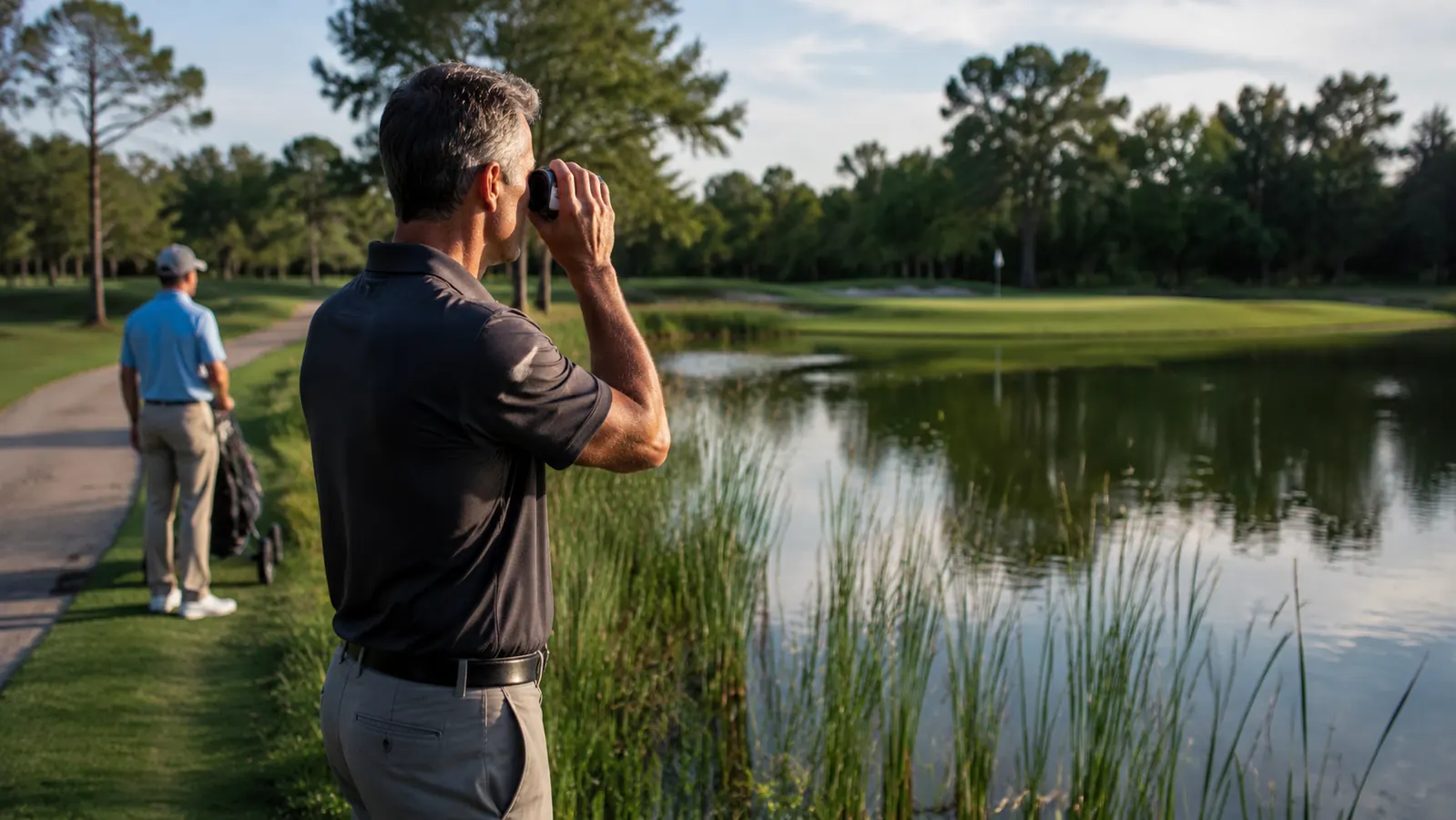
Who Should Buy Which
Buy the Callaway 300 Pro if you are the golfer I write for: you play a couple of times a week, you want the real number so you stop guessing into a par three, and you would rather keep the difference in your pocket for greens fees and range balls. That is most of us, and it is my default answer. The unit is light on the strap, simple to operate, and accurate enough that your misses stop being yardage misses and go back to being swing misses, which is where they belong.
Buy the Bushnell Tour V5 Shift if the instrument itself is part of the pleasure, if you play in weather that punishes lesser gear, or if you wear glasses and want the most forgiving eyepiece you can find. It is the enthusiast's choice, and it earns its keep in exactly the ways the marketing is telling the truth about: feel, build, and clarity. If you are the player who relishes the difference between a good tool and a great one, nobody here will talk you out of the Bushnell, and I would not try.
The line I draw is this. If the extra cost of the Bushnell would be something you feel, take the Callaway 300 Pro and spend the difference on the practice green, because that is where your score is actually made. If you would not feel it at all, the Bushnell will still feel like the busier tool in your hand in year five. Both of those answers are honest. The one wrong answer is standing on the 4th tee guessing your distance because you could not decide between them and carried neither.
The Small Details That Surface After 30 Rounds
Three small things decided my daily life with both units, and none show up on a spec sheet. The Callaway sits lighter on the cart, which matters on a hilly 18 in July when it is clipped to your bag for four hours. The button layout is simpler: power and shot, and you are done. The Bushnell's controls take a round to learn, with the mode and slope toggles arranged around the side, and on a close Sunday game you notice the extra fraction of a second your thumb spends finding its place.
Eye relief matters if you wear glasses, and I do. The Callaway's window works, but you have to seat the eyepiece carefully to see the full display under a hat brim. The Bushnell presents a bigger, more forgiving window. Both take a standard CR2 battery that lasts a season, and neither ever handed me a read I mistrusted under 220 yards, which is the number that actually decides approach play and therefore decides most of my weeks.
Here is my bottom line after a season of both units sharing a strap. The Callaway 300 Pro is the rangefinder I reach for when a Sunday money game is on the line, because it gives me the same numbers with none of the expensive guilt about where those numbers came from. The Bushnell is the one I reach for when I want to feel a little more like the golfer who plays for a living. One of those shows up on your scorecard. The other shows up in your hand. You already know which kind of golfer you are.
My pick after a season with both: the Callaway 300 Pro
It reads the same yardages, costs less today, and keeps the slope switch where your thumb can find it. Check today's price and see for yourself.
Amazon Check Today's Price on Amazon →