

I used to pack my TaylorMade stand bag the lazy way. Shove a club wherever there was room. Drop my phone in the same pocket as the tees. Let the rain cover ride loose on top. By the turn it felt like I was carrying a sack of wet laundry with a strap on it. My shoulders ached, the bag kept wanting to topple off its own legs, and I was digging through three zippers to find a glove while my foursome waited on the tee.
Then a course marshal, an older guy who had caddied his whole adult life, watched me fish a ball out of the bottom pocket and said the thing that changed how I treat every round. "You're not packing a bag, you're throwing one." He was right, and he was being kind about it. A packed bag is a heavy bag, and a heavy bag is a bad round before you ever take a swing. This is the pocket-by-pocket system I have used every weekend since, and it is the exact routine the TaylorMade Pro stand bag rewards. If your clubs rattle loose and your snacks end up welded to a bottle of water, this is for you.
Start With a Bag That Actually Carries Well
None of this packing works if the bag fights you on the way out. The TaylorMade Pro stand bag is light enough to carry all 18 and organized enough that these routines feel natural. If you are still hauling a bag that sits badly, fix that first.
Amazon Check Today's Price on Amazon →Step 1: Empty It Completely Before You Fill It
Most of the weight you carry is junk you forgot was in there. Before a single round I turn the TaylorMade bag over and dump everything onto the grass. You would be surprised how many loose balls, broken tees, and receipts collect at the bottom of the ball pocket over a month. Empty it all, then decide what actually earns a spot.
My rule of thumb is simple: if I have not used it in the last three rounds, it stays home. That alone cut about four pounds off what I carried just by excising the thirteen stray balls, the backup glove that had gone stiff, and the half-empty sunscreen from last September. The one thing I always keep, even if it never gets used, is a spare packed glove in a sealed pocket. Cold mornings claim gloves fast, and a dry one saves the back nine.
I lay the whole pile out in front of me before I touch it, not because I am tidy, but because seeing everything in one place makes the call obvious. A club you keep only for the range is dead weight on a Tuesday round. A second water bottle is fine in June and pointless in October. Decluttering is the cheapest weight loss in golf, and it sets up everything after it. You cannot balance a bag that is two-thirds forgotten junk, or find a ball cleanly, or feel the stand work right. Start here every single time.
Step 2: Put the Weight Low and Centered
Here is the part nobody teaches. Where the weight sits matters more than how much you pack. Heavy things low, small things up top, and the whole bag should feel balanced when you grab the handle, not like one side is trying to flip over your shoulder. The TaylorMade Pro is designed around a low center of gravity, it carries well because the frame tucks the weight against your back, but you have to load it in that spirit.
So the heaviest stuff, balls, a full water bottle, the rangefinder if I am carrying it, goes in the lower pockets. The light stuff, rain hood, a towel, snacks, goes higher. When you sling it on your shoulder it should sit level, not sag to one hip. If it lists left, you over-stuffed the shag pocket. If it swings around your back, the center pocket is overloaded. Fix it before you walk, not halfway up the third fairway.
There is a simple test I do before I ever leave the driveway. I hoist the bag, let it settle for three seconds, and drop one hand off the handle. If the bag stays level on my shoulder, I am good to go. If it wants to roll to one side, something is off and I fix it right there. A balanced bag is not a comfort nicety. It is how you get through a hilly 18 without your back filing a complaint on the 12th tee. Keep the bulk low and centered and your round gets easier by the hour.
Step 3: Assign Every Pocket a Job and Never Swap It
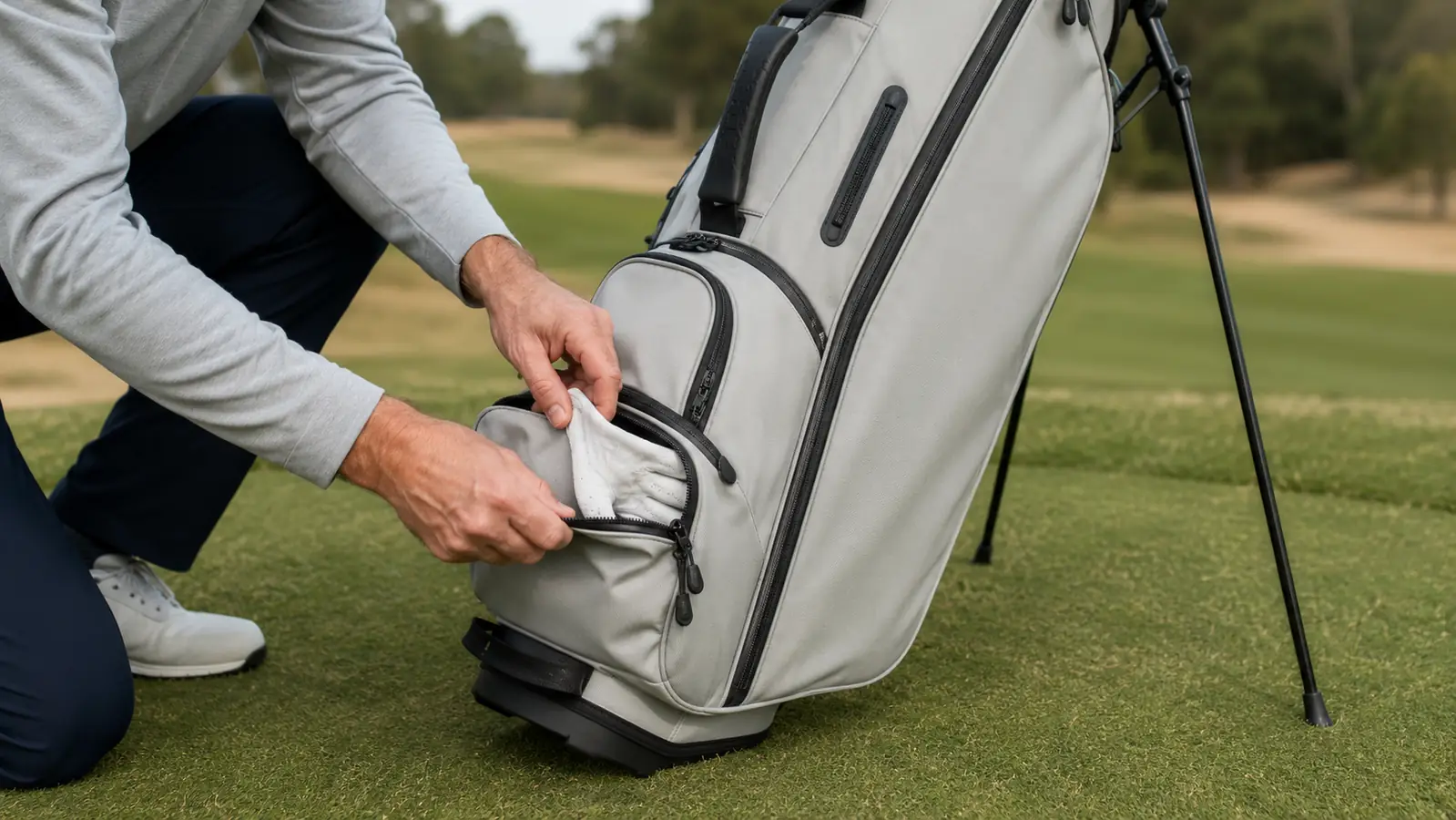
The reason people lose a glove or a ball mid-round is they stuff pockets at random, so nothing has a home and everything gets buried. Give each pocket one job and you will reach into the right zipper without thinking. It becomes muscle memory by the third round.
On my TaylorMade Pro this is the assignment. The valuables pocket, the one that sits high for easy reach, holds my wallet, car keys, phone, and divot tool. Nothing else. The ball pocket takes balls and a sleeve in reserve. The same pocket as the glove is a mistake, I did that for years and lost three gloves, so the glove lives in its own small sleeve pocket with the tees. One pocket for snacks and a drink. One pocket for the rangefinder and sunscreen. The rain cover, only if the forecast earns it, rides in the quick-access flap.
The point of fixed pockets is that a lost item is a one-zipper problem, not a dig-everything-out problem. When the rangefinder has a home, it goes back there after use instead of getting tossed on top of the balls. Keep it boring and repeatable and you will never hear, again, the dreaded words "which pocket was it in this time?". Take two minutes before you walk to run the mental check, valuables, balls, glove, snacks, and you are set. If you ride a cart, keep the valuables pocket facing the cart so you can reach your keys without unbuckling, a tiny thing that saves a fumble every round.
Step 4: Let the Club Division Do the Sorting
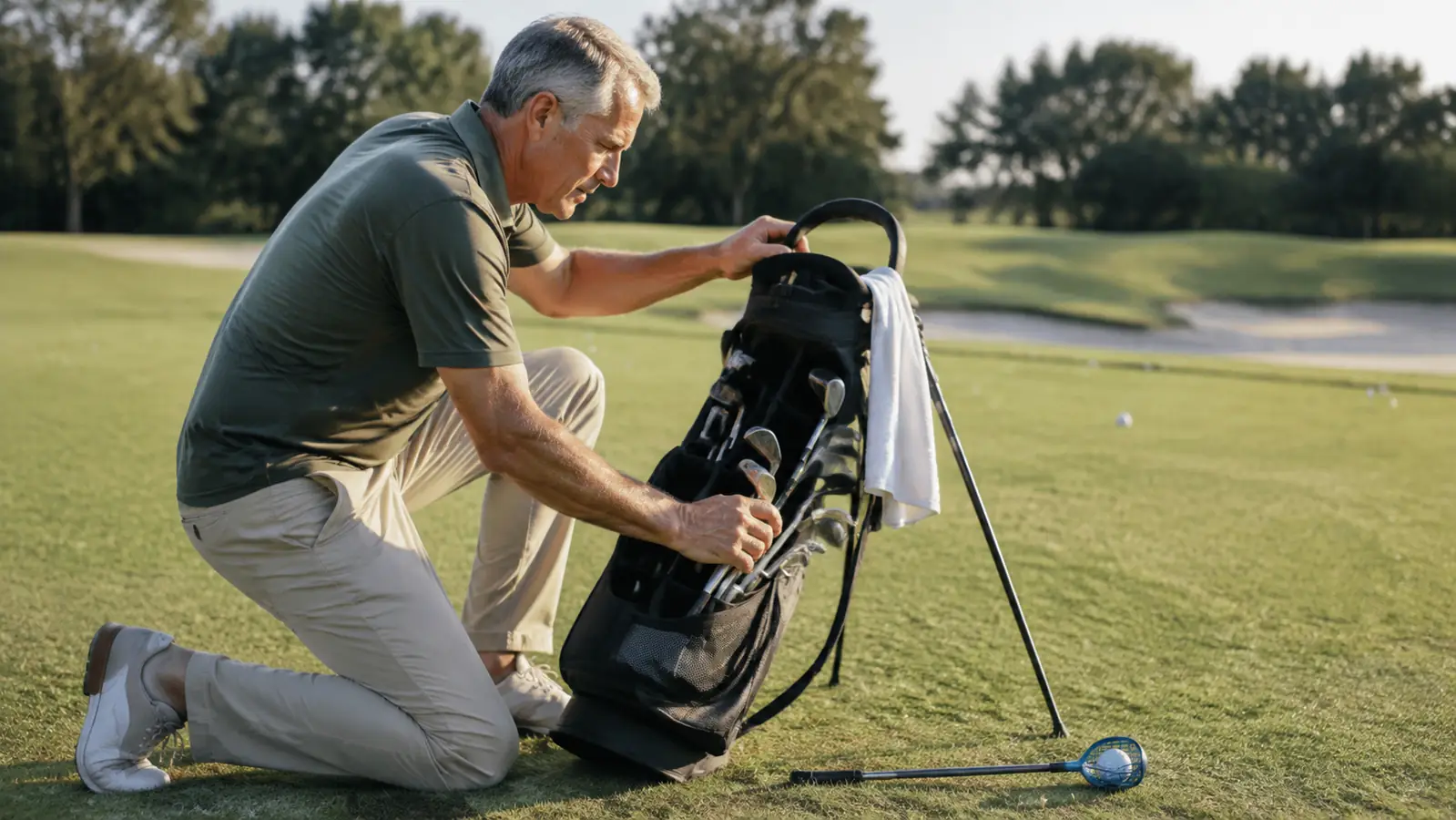
A stand bag has a divider top for a reason, so your clubs do not fight each other to the bottom. Let it work. Put the heavier clubs, driver, fairway woods, long irons, in the slots that sit closest to your back when you carry. The wedges and putter stay in the front slots, near the stand. That keeps the heavy end of the club set next to the weight in the lower pockets and the bag rides level.
It also saves your grips. Clubs jamming against each other in an un-divided bag wear the grips and that costs you feel on the last three holes. With the TaylorMade Pro's full-length dividers, every club has its own lane down to the bottom. Offset the putter so the grip does not snag when it slides in and out, a small thing that saves you from yanking your alignment on the first green.
Club organization wraps up the balance work you did in step two. When the heavy irons sit over the heavy pockets and the light wedges sit at the front, the bag wants to stay flat on your back instead of rolling. You will feel the difference on the very first carry. And if you use a push cart, treat the bag the same way, the club layout that balances a carry also keeps a cart bag from tipping over the edge of the cart on a slope.
Step 5: Handle the Small Stuff Before You Leave the House
The small items are what actually cause the mid-round meltdowns, so they get their own discipline. Tees in a sleeve pocket, not loose, so they stop trickling under the rain cover. A towel looped on the handle, not shoved in a pocket where it soaks everything else. A pencil and a ball marker clipped where you can grab them from the cart or off your hip.
Your phone is the exception to the valuables pocket. If you score on an app, you will have it out constantly, so keep it in the upper quick-access pocket and pull it once a hole instead of fishing for it. Same for the rangefinder, if it is living in a side pocket, keep it in the same one every time so your hand knows where to go on the 4th fairway. A pair of rain gloves is worth having even on a dry day, stuffed flat in the ball pocket, because a damp grip at the turn is a stroke you give away for nothing.
The last small-stuff habit is the one that saves your round, do the ten-second reset at the turn. One glance, gloves back in their sleeve, balls topped up, towel dry on the handle, water full. The TaylorMade Pro makes the reset painless because every pocket is labeled by its job in your head. Fifteen years of carrying taught me the round is won as much in the setup as in the swing.
What Else Helps: A Greasy-Fast Repeatable Routine
The system only works if it becomes automatic, so write it once on a notes app and stop rethinking it every Sunday. Pack for the course you are actually playing, not the one in your head. Riding? You can be a little looser with the valuables pocket placement. Walking a hilly track, like the one I play with more hill than flat? Go strict on low and centered, that is where it pays off the most.
And treat a rain cover the way you treat a rain suit, worth it or not, decide from the forecast before you leave, then commit. A half-broken cover rattling on a dry day with the wind up is its own little torture. Keep the cover off unless it will genuinely rain, and keep the bottom of the bag dry no matter what by sealing the valuables pocket against the morning dew. A dry bag bottom is the difference between a clean glove and a soggy one at the 10th tee.
One last thing. This whole routine is about cutting friction so you can think about the shot, not the gear. The morning I stopped hunting through pockets was the morning my pre-round stopped feeling like a chore, and that patience carried onto the first tee. Do the driveway work once and you collect that calm every round of the season.
A packed bag is a heavy bag is a bad round. You settle the round's fate in your driveway, not on the first tee.
I have used this exact system for two full seasons now, through a wet spring, a scorching summer, and the muddy shoulder months, and it holds. My TaylorMade Pro stand bag still looks organized inside because it only ever holds what earns a spot, and my shoulders come home better than they did when I was hauling junk. That is the whole deal. A lighter, better-packed bag means a looser, better round, and it starts in the driveway ten minutes before you leave.
Get the Bag That Makes the System Easy
This routine works with any stand bag, but it is easiest when the bag is light, balanced, and divided to hold each club. Pack it once and you are done for the season.
Amazon Check Today's Price on Amazon →